
Fritillaria imperialis Aurora

Grow Guarantee
Buy without worries, you have a two-month growth guarantee on all plants!

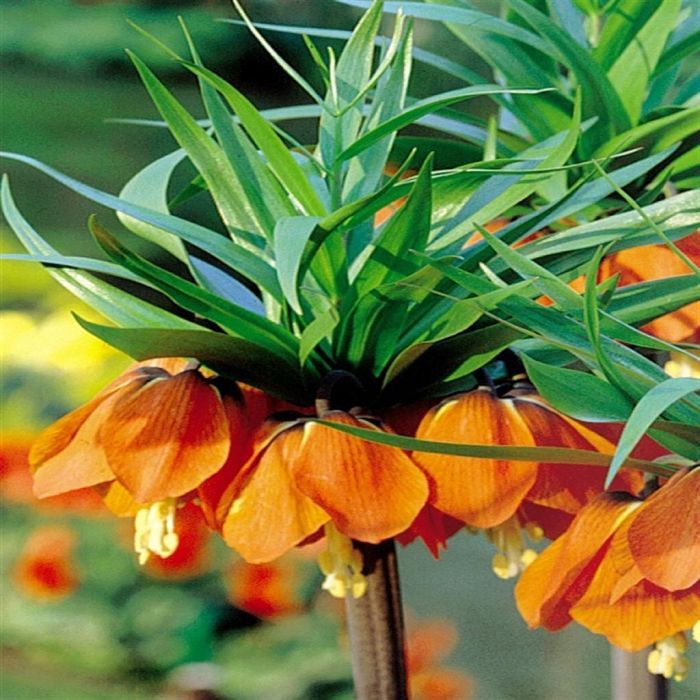
- 1 x Crown Imperial Fritillaria imperialis Aurora 20/22 cm
| Botanical name | Fritillaria imperialis Aurora |
|---|---|
| Free Shipping | No |
| Category | Fritillaria |
| Delivered as | Flower bulbs |
| Qty | 1x |
| Flowers | Yes |
| Flower period | Early Spring |
| Fragrant | No |
| Cutflowers | No |
| Flower colour | Orange |
| Fruits | No |
| Edible | No |
| Location | Sun and shade |
| Hardy | Yes |
| Groundcovering | No |
| Naturalizing | No |
| Plant spacing | 35cm |
| Plant Depth | 25cm |
| Preferred Soil | Well drained soil |
| Full grown height | 80cm - 100cm |
| Mature width | 30cm - 40cm |
| Poisonous | No |
| Size | 20/22 |
How to take care of Fritillaria imperialis Aurora
Fritillaria imperialis Aurora are quite easy to grow, choose a position that receives some sunlight every day. Handle Fritillaria imperialis Aurora with care and never let the fleshy scales dry out. Add some sand to the planting hole and plant Fritillaria imperialis Aurora on its side so that the hollow crown does not hold water and surround it with coarse sand to improve drainage. Drainage is very important and Fritillaria imperialis Aurora work better in a stony soil. Stake the taller species for support during the flowering period and fertilise with organic fertiliser early spring and every couple of years apply a mulch of well-rotted compost. The shorter species are best grown in clumps in borders; groups of 5-7 bulbs are most effective. After flowering let the foliage die back naturally and cut back stems to ground level and mark the spot with a cane to avoid damaging the bulb during the dormant season. Best left undisturbed.
Bulb rot is a significant problem in poorly drained soils. Plants are susceptible to leaf spot, rust and mosaic virus. Slugs and snails may damage foliage.
Grow Guarantee
Buy without worries, you have a two-month growth guarantee on all plants!