Fritellarias
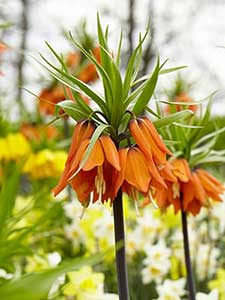
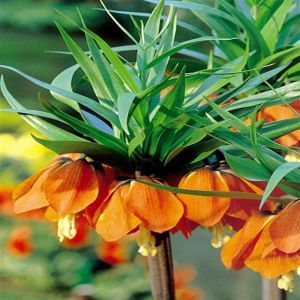 Fritillaria imperialis AuroraFritillaria imperialis Aurora£9.95Available again next AutumnOut of stockFritillaria imperialis Aurora is lovely ornamental spring bloomer; its stately crowns hang down from the top of 3ft upright stems and have orange Learn More
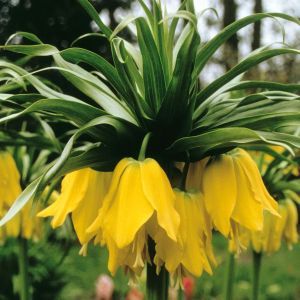 Fritillaria imperialis Maxima luteaFritillaria imperialis Lutea£12.95Available again next AutumnOut of stockFritillaria imperialis Maxima lutea is lovely ornamental spring bloomer; its stately crowns hang down from the top of 3ft upright stems and have... Learn More
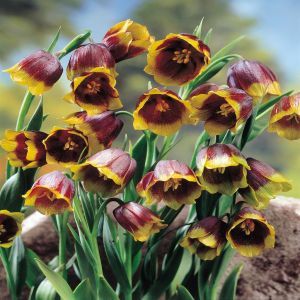 Michaels Fritillaria Uva Vulpis x 10Fritillaria uva vulpis£2.25Available again next AutumnOut of stockMichael's Fritillaria Uva vulpis has graceful nodding flowers in a dramatic two-tone combination of purple-red tipped with deep golden. They produce Learn More
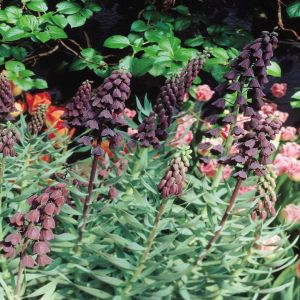 Fritillaria persicaFritillaria persica£7.50Available again next AutumnOut of stockFritillaria Persica produces attractive tall spikes topped by hanging, narrow bell-shaped purple to grey green flowers in spring, which is very... Learn More
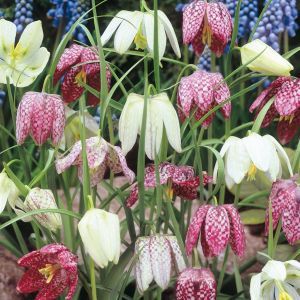 Fritillaria meleagris x 20Fritillaria meleagris£4.25Available again next AutumnOut of stockFritillary meleagris produces unique chequered bell shaped flowers in purple and white hues. Perfect for naturalizing and for growing in shady... Learn More
Grow Guarantee
Buy without worries, you have a two-month growth guarantee on all plants!

Fritillarias are one of the most unusual flowers of spring
Fritillaria bulbs produce nodding bell shaped flowers, many varieties such as Fritillary meleagris the Snake Head Fritillary have a checkered pattern while others like Fritillaria crown imperialis Lutea are dramatic and imposing with huge yellow flower-heads.
Fritillaria bulbs are easy to grow; Fritillaria bulbs like to be planted in a partially shaded and sheltered location. Remove faded Fritillaria flower-heads before they go to seed and allow the foliage to die back naturally.
Fritillaria bulbs naturalize well in the border, just plant them about 20 cm deep and leave them undisturbed; Fritillaria bulbs will re-appear more abundantly each year. Fritillaria bulbs can also be lifted and divided in autumn.
Fritillaria bulbs have a strong pungent smell said to deter rodents.
Hardy Fritillaries comes in many shapes and sizes.
Interesting and unusual, producing bell or cup shaped flowers in spring, they will completely naturalize in the garden.
How to Grow Fritillaria
Fritillaria are spring flowering Bulbs, grown for their bell shaped flowers. Drainage is important, plant the bulb on its side at a depth of 12 cm so that the hollow crown does not hold water and surround it with coarse sand to improve drainage. The dwarf varieties of Fritillaria species are best grown in clumps in borders; groups of 5-7 bulbs are most effective. Place them in an open sunny position and do not let them dry out. They work better in a stony Soil. Plant the small ones at a depth of 5 - 8 cm. Stake the large Crown Imperial type of Fritillaria's for support during the flowering period and fertilise all with organic fertiliser early March. After flowering let the foliage die back naturally and cut back stems to ground level and mark the spot with a cane to avoid damaging the bulb during the dormant season. Best left undisturbed. Give a mulch cover in winter.